Mathematics and visual arts may seem like two distinct subjects, but integrating them can deepen students’ understanding of math concepts while fostering creativity. Research suggests that students learn more effectively when they can visualize abstract concepts, making visual arts an excellent tool for engaging young learners in math.
In this article, we will explore creative strategies to blend visual arts and elementary math, offering practical classroom activities, resources, and research-backed benefits.
Why Integrate Visual Arts into Math?
Incorporating visual arts into math instruction helps children grasp complex ideas by providing tangible, hands-on learning experiences. Here’s how visual arts enhance math learning:
| Math Concept | Visual Arts Integration | Learning Benefit |
|---|---|---|
| Geometry | Creating tessellations, exploring symmetry, drawing shapes | Improves spatial reasoning and recognition of geometric properties |
| Fractions & Ratios | Mixing paint to create different shades, proportion-based drawings | Helps students see and apply fraction concepts visually |
| Patterns & Sequences | Designing mosaics, repeating patterns, art sequencing | Enhances pattern recognition and logical thinking |
| Measurement & Proportions | Scaling artwork, perspective drawing, measuring objects in art | Develops an understanding of units, proportion, and real-world applications |
| Data Visualization | Creating bar graphs, pie charts with colors and drawings | Reinforces graphing skills in a visual and engaging way |
🔹 Research Insight: Studies from the National Art Education Association (NAEA) show that students exposed to integrated art and math lessons demonstrate improved problem-solving skills and deeper retention of concepts. Source
Effective Strategies to Integrate Visual Arts in Math Lessons
1. Geometric Art & Symmetry Drawings
📌 Objective: Develop an understanding of symmetry, geometric shapes, and spatial relationships.
Activity:
- Have students fold paper and create mirror-image paintings to explore symmetry.
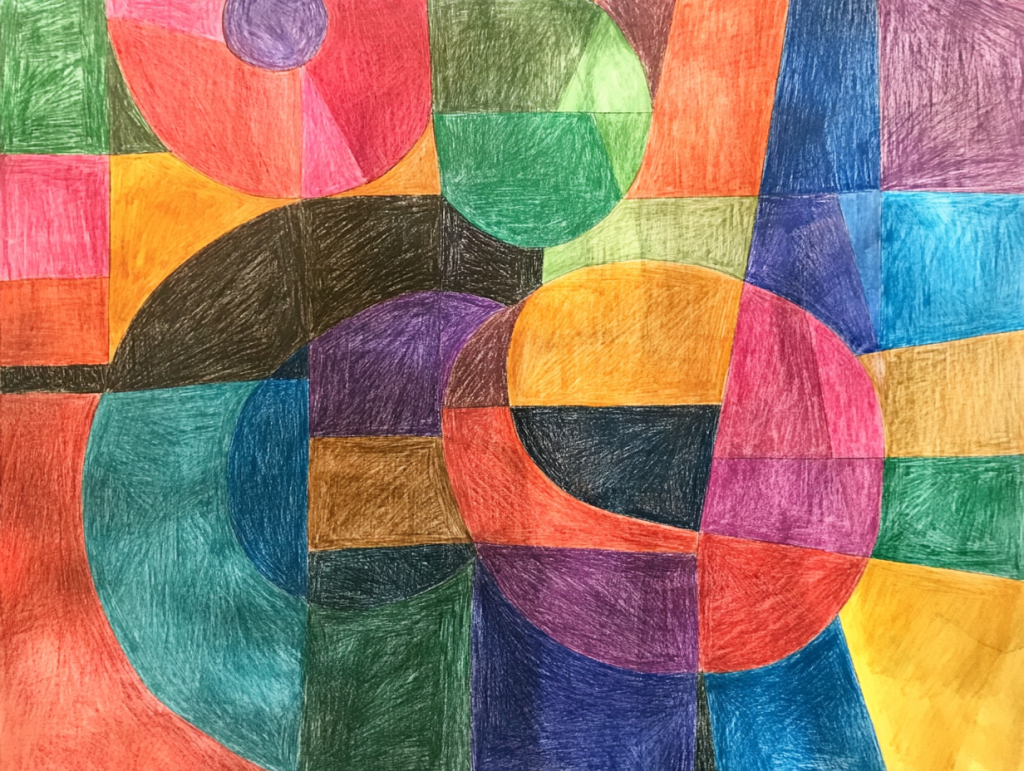
- Use mandalas, tessellations, and Islamic geometric art to discuss symmetry and pattern repetition.
- Create optical illusion art using angles and geometric shapes.
🔗 Try it with these resources:
- Tessellation Creator: nctm.org
- Symmetry Drawing Lessons: khanacademy.org
2. Using Art to Visualize Fractions & Ratios
📌 Objective: Strengthen fraction understanding through color mixing and proportional design.
Activity:
- Paint Mixing Fractions: Have students mix paint colors using fraction ratios (e.g., 1/3 red + 2/3 blue = purple).
- Pizza or Pie Art: Draw and color different fraction parts in a pizza slice.
- Collage Proportions: Create a collage where each color represents a fraction of the total image.
🔗 Try it with these resources:
- Fraction Art Ideas: education.com
- Color Theory & Fractions: artsedge.kennedy-center.org
3. Data Visualization with Art Charts & Graphs
📌 Objective: Teach students how to represent mathematical data through artistic visuals.
Activity:
- Have students draw bar graphs, pie charts, or line graphs using colors and icons instead of numbers.
- Storytelling through Data: Ask students to illustrate and narrate data trends using visual storytelling.
- Use real-life examples, such as favorite colors in the class, and represent the data artistically.
🔗 Try it with these resources:
- Graphing with Art: brilliant.org
- Creative Data Visualization for Kids: weareteachers.com
4. Measurement Through Artistic Creations
📌 Objective: Improve students’ ability to measure and apply real-world math skills.
Activity:
- Scaling Drawings: Give students small sketches and ask them to enlarge them using a grid method.
- Perspective Drawing: Teach one-point and two-point perspective to explore proportional relationships.
- Shadow & Light Measurement: Have students measure and predict shadow lengths based on light position.
🔗 Try it with these resources:
- Perspective Drawing Math: artsintegration.com
- Measurement in Art Projects: mathplayground.com
Where to Find More Math & Art Resources
For teachers looking for ready-to-use lesson plans, these websites offer free or affordable resources:
| Website | Resources Available | Visit Link |
|---|---|---|
| National Art Education Association | Research, lesson plans, and art-math integration resources | arteducators.org |
| Smithsonian Learning Lab | Interactive math-art projects for students | learninglab.si.edu |
| Khan Academy | Free math courses with visual demonstrations | khanacademy.org |
| ArtsEdge – Kennedy Center | Free art-based learning projects | artsedge.kennedy-center.org |
| WeAreTeachers | Creative lesson plans for art and math | weareteachers.com |
🔹 Related Read: Elementary Math Games That Make Learning Fun
Final Thoughts: Art & Math – A Powerful Learning Duo
Visual arts and mathematics go hand in hand when it comes to engaging students in creative and meaningful ways. Whether using tessellations, fraction-based art, or visual storytelling with data, these techniques help young learners grasp mathematical concepts while enjoying hands-on creativity.
By integrating visual arts into math lessons, teachers can enhance critical thinking, problem-solving, and engagement while making learning more interactive and fun.
📢 Want more ideas for engaging math lessons? Subscribe to BADA Education for free teaching strategies, classroom activities, and learning resources!