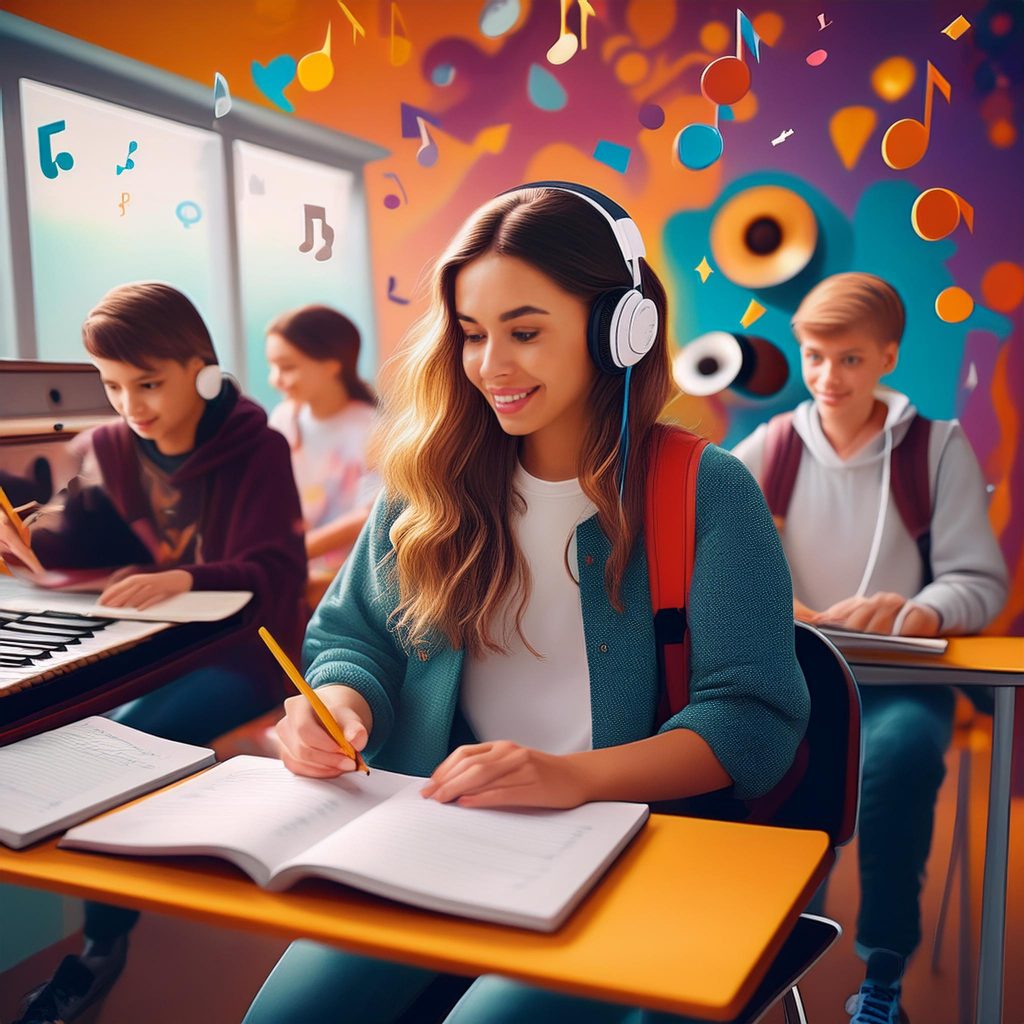
Music is a universal language that allows individuals to express their thoughts, emotions, and experiences in a creative way. Among various musical activities, songwriting serves as a powerful tool for students to develop self-expression, emotional intelligence, and confidence. In educational settings, integrating songwriting into the curriculum not only enhances creativity but also fosters social-emotional learning (SEL). This article explores the benefits, challenges, and strategies for incorporating songwriting into student learning.
The Benefits of Songwriting for Self-Expression
🎵 1. Emotional Outlet & Mental Well-being
- Benefit: Writing songs enables students to process and articulate emotions, reducing stress and anxiety.
- Example: A student struggling with personal issues may find comfort in writing lyrics about their feelings rather than verbalizing them in conversation.
- Supporting Research: Studies show that music therapy and songwriting improve emotional regulation and self-awareness.
✍️ 2. Enhancing Creativity & Critical Thinking
- Benefit: Songwriting encourages students to think outside the box, experiment with language, metaphors, and melodies.
- Example: Crafting lyrics with rhyme schemes and storytelling structures helps improve both linguistic and analytical skills.
🎤 3. Boosting Confidence & Communication Skills
- Benefit: Performing original songs in front of an audience helps students overcome public speaking anxiety and fosters self-esteem.
- Example: Schools that integrate music programs often observe students developing stronger verbal communication skills.
🤝 4. Strengthening Social Connections & Teamwork
- Benefit: Collaborative songwriting builds teamwork and improves peer relationships.
- Example: A group of students working on a class song learn to listen, compromise, and appreciate different perspectives.
📚 5. Enhancing Literacy & Language Skills
- Benefit: Writing lyrics requires grammatical structure, vocabulary development, and storytelling skills.
- Example: English teachers use songwriting to improve students’ creative writing and poetic expression.

Challenges of Using Songwriting in Education
🛑 1. Fear of Judgment: Some students may feel hesitant to share personal lyrics.
💡 Solution: Create a safe, non-judgmental environment where students feel comfortable expressing themselves.
🛑 2. Lack of Musical Knowledge: Not all students know how to compose music.
💡 Solution: Provide simple tools like loop-based software (GarageBand, Soundtrap) or templates to help beginners.
🛑 3. Time Constraints in Curriculum: Schools may struggle to fit songwriting into academic schedules.
💡 Solution: Integrate songwriting into language arts, social studies, or SEL activities to maximize time efficiency.
Best Strategies for Teaching Songwriting
✅ 1. Start with Simple Prompts
- Example: “Write a song about your favorite memory” or “Express an emotion through lyrics.”
✅ 2. Use Technology & Digital Tools
- Recommended Tools:
- 🎼 GarageBand (Apple) – Beginner-friendly for creating songs.
- 🎧 Soundtrap (by Spotify) – Collaborative online music-making tool.
- 🎤 LyricLab – AI-powered lyric writing assistant.
✅ 3. Encourage Collaboration
- Organize group songwriting projects where students brainstorm and build songs together.
✅ 4. Connect with Real-World Songwriters
- Invite local musicians, alumni, or professional songwriters to conduct workshops.
✅ 5. Integrate into Other Subjects
- History Class: Write songs about historical events.
- Science: Create lyrics to remember complex processes.
- Literature: Transform a book’s theme into a song.
Recommended Websites & Resources
- National Association for Music Education (NAfME): https://nafme.org
- Songwriting Education Network: https://songwritingeducationnetwork.com
- Soundtrap for Education: https://www.soundtrap.com/edu
- GarageBand (Apple): https://www.apple.com/mac/garageband
- PBS Music Resources for Educators: https://www.pbslearningmedia.org
Conclusion
Incorporating songwriting into education empowers students to express themselves, develop social-emotional skills, and improve their communication abilities. Despite challenges, creative teaching methods and digital tools make songwriting an accessible and powerful learning experience. By fostering a musical, expressive learning environment, educators can help students gain confidence and strengthen their creative voices. 🎵✨