
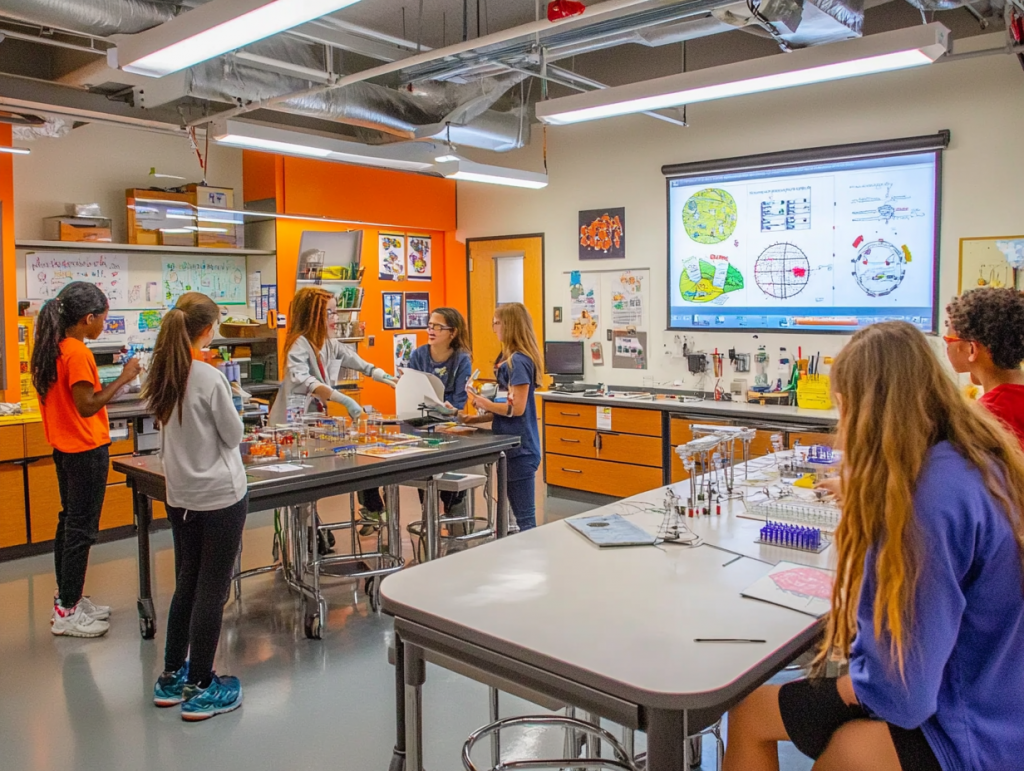
Boosting Student Achievement: The Impact of Rigorous Project-Based Learning in AP Courses
Advanced Placement (AP) courses are designed to challenge high school students with college-level coursework, preparing them for academic success beyond secondary education. However, traditional learning methods often fail to engage students in deep critical thinking, problem-solving, and real-world application. Project-Based Learning (PBL) has emerged as a powerful educational approach, providing students with hands-on, inquiry-driven learning experiences that significantly enhance engagement, retention, and academic performance.
This article explores how Project-Based Learning impacts AP courses, the benefits for students, and how educators can implement PBL effectively.
1. What is Project-Based Learning (PBL)?
Project-Based Learning is an instructional methodology that encourages students to learn by actively engaging in real-world and meaningful projects. Instead of passively absorbing content, students collaborate, research, and create solutions to complex problems.
1.1 Key Characteristics of PBL
- Student-Centered Learning: Encourages students to take ownership of their education.
- Real-World Application: Connects academic concepts to practical, real-life problems.
- Interdisciplinary Approach: Integrates multiple subjects for a more holistic learning experience.
- Inquiry and Exploration: Encourages critical thinking, creativity, and problem-solving.
Resource: Buck Institute for Education – PBL Works
2. The Benefits of Project-Based Learning in AP Courses
2.1 Enhancing Academic Performance
- PBL deepens understanding by moving beyond memorization to application.
- Encourages higher-order thinking skills, helping students excel in AP exams.
- Improves retention rates as students actively engage with concepts rather than passively consuming information.
2.2 Developing Critical Thinking and Problem-Solving Skills
- AP students learn how to analyze, synthesize, and evaluate information.
- Projects require in-depth research, collaboration, and innovative problem-solving.
2.3 Increasing Engagement and Motivation
- Hands-on projects increase student interest and investment in learning.
- Students find personal relevance in their projects, making learning more meaningful.
- AP courses become more interactive, reducing stress and burnout.
2.4 Strengthening College and Career Readiness
- AP students gain experience in research, teamwork, and presentation skills.
- PBL mirrors real-world scenarios, preparing students for future academic and career challenges.
Resource: Edutopia – Project-Based Learning
3. Implementing PBL in AP Courses
3.1 Designing Rigorous and Authentic Projects
- Align projects with AP curriculum objectives and real-world applications.
- Encourage open-ended inquiry and student-led exploration.
- Incorporate peer collaboration and teacher mentorship.
3.2 Integrating Technology for Deeper Learning
- Use digital research tools, data analysis software, and online collaboration platforms.
- Encourage students to present findings using multimedia formats.
3.3 Encouraging Cross-Disciplinary Connections
- Combine STEM with humanities for more dynamic learning experiences.
- Example: A Physics AP project on sustainable energy incorporating environmental science and economics.
3.4 Assessing Learning Outcomes Effectively
- Use performance-based assessments, rubrics, and peer evaluations.
- Encourage student reflection and self-assessment.
- Incorporate AP-style multiple-choice and free-response components into project grading.
Resource: College Board – AP Classroom
4. Success Stories of PBL in AP Courses
4.1 AP Biology: Environmental Sustainability Project
- Students research local ecosystems, conduct experiments, and propose conservation strategies.
- Final presentation to local environmental organizations enhances real-world impact.
4.2 AP U.S. History: Historical Documentary Creation
- Students produce a documentary analyzing historical events with primary sources.
- Develops critical research skills and historical analysis.
4.3 AP Calculus: Real-World Math Applications
- Students design and test mathematical models for financial forecasting.
- Application of derivatives and integrals to practical business and engineering problems.
Resource: BADA EDUCATION – AP Learning Strategies
5. The Future of PBL in Advanced Education
5.1 Expansion of Online and Hybrid PBL Models
- Virtual collaboration tools will expand global learning opportunities.
- AI-driven analytics will personalize student learning experiences.
5.2 Increasing Demand for Skill-Based Learning
- Universities and employers are seeking problem-solvers, not just test-takers.
- AP courses incorporating PBL better prepare students for higher education and beyond.
5.3 AI and Data-Driven Learning Enhancements
- AI-powered feedback tools will provide real-time insights on student progress.
- Adaptive learning platforms will tailor projects to individual student needs.
Resource: STEM Education Coalition
Final Thoughts
Project-Based Learning is transforming AP education by fostering deep engagement, critical thinking, and real-world problem-solving. When implemented effectively, PBL enhances student achievement, prepares learners for higher education, and equips them with essential 21st-century skills.
By incorporating rigorous, inquiry-based projects into AP courses, educators can cultivate a more dynamic and impactful learning experience.
Are you ready to revolutionize AP learning? Start implementing Project-Based Learning today!