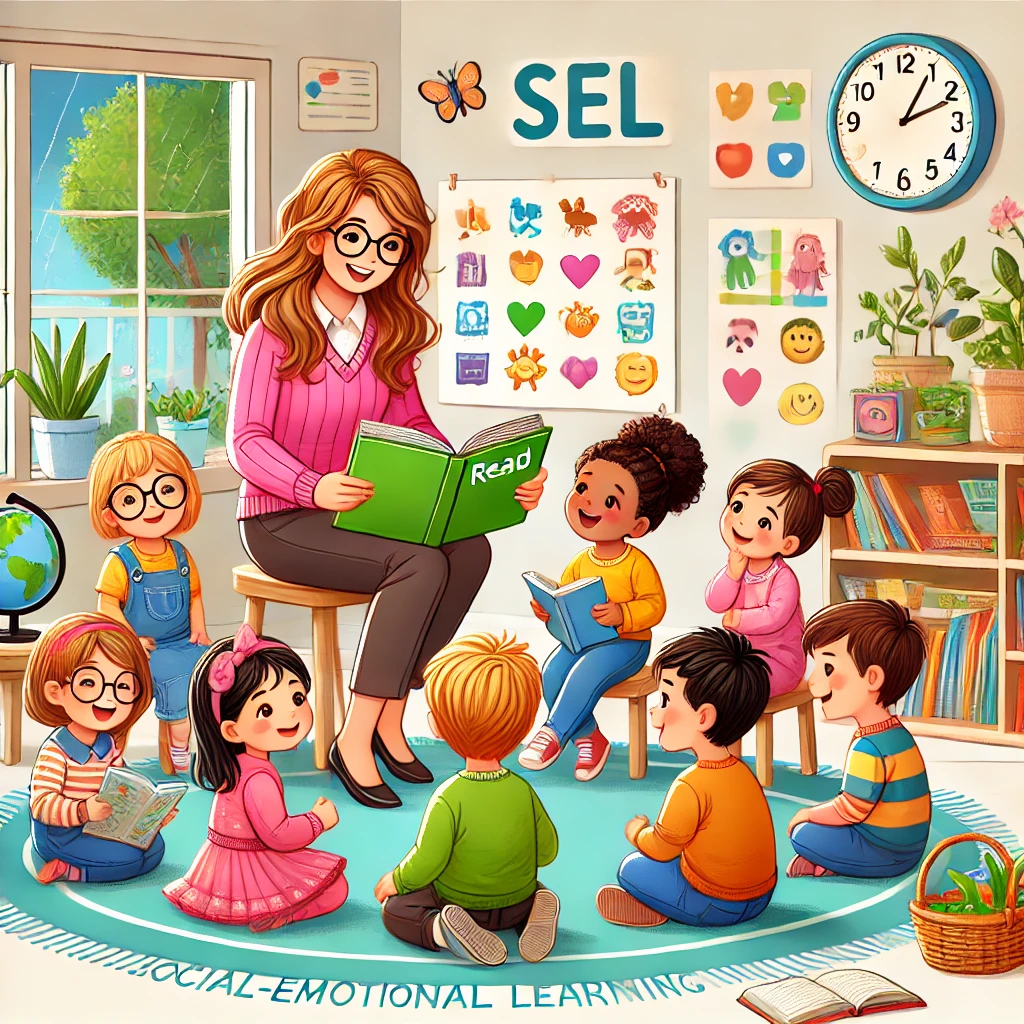
Early literacy development is more than just learning to read and write—it is about building communication, emotional intelligence, and social skills. When Social-Emotional Learning (SEL) is integrated into early literacy instruction, children develop stronger comprehension, empathy, and confidence, laying the foundation for lifelong success.
This guide explores how SEL enhances literacy development, effective strategies for educators and parents, and free resources to support young learners.
1. Why Social-Emotional Learning (SEL) Matters in Literacy Development
How SEL Supports Literacy Skills
- Enhances comprehension: Understanding emotions helps children relate to characters and story themes.
- Builds confidence: Strong SEL skills empower students to express themselves through writing and discussion.
- Develops critical thinking: Encourages reflection on perspectives, emotions, and problem-solving.
- Strengthens communication: Promotes meaningful conversations and richer storytelling.
The Science Behind SEL and Literacy
- Research shows that children with higher emotional intelligence perform better in reading and writing.
- SEL fosters active listening and discussion skills, crucial for literacy development.
- Emotionally aware children engage more deeply with texts, improving comprehension and analysis.
Resource: https://casel.org/ – The Collaborative for Academic, Social, and Emotional Learning (CASEL) provides research on SEL benefits.
2. Effective Strategies to Integrate SEL in Early Literacy
1. Reading Emotionally Rich Stories
- Choose books with strong emotional themes and diverse characters.
- Discuss character emotions, motivations, and reactions.
- Use guided questions:
- How do you think the character felt?
- Have you ever felt the same way?
- What would you do differently?
Recommended Books:
- The Color Monster by Anna Llenas – Understanding emotions.
- I Am Enough by Grace Byers – Building self-confidence.
- Last Stop on Market Street by Matt de la Peña – Developing empathy and perspective.
Resource: https://www.commonsensemedia.org/ – Book recommendations with SEL themes for various age groups.
2. Journaling for Emotional Expression
- Encourage students to keep reflection journals.
- Provide prompts like:
- Today, I felt happy when…
- One time I felt nervous was…
- If I could talk to a book character, I would ask…
- Use visual journaling with drawings and storytelling for younger children.
Activity Tip:
- Create classroom emotion charts, where students log their feelings and explain them through writing.
Resource: https://www.scholastic.com/ – Writing prompts and journaling activities for young learners.
3. Role-Playing and Storytelling for Empathy
- Assign students character roles from books and have them act out scenes.
- Encourage them to express emotions through body language and tone.
- Discuss how different perspectives change a story’s meaning.
Activity Tip:
- Use puppet shows to help young learners express emotions safely.
Resource: https://www.pbs.org/parents/ – Fun activities for storytelling and dramatic play.
4. Encouraging Group Discussions and Peer Learning
- Use think-pair-share discussions about book themes and emotions.
- Have students work in small groups to rewrite story endings based on different emotional responses.
- Assign peer feedback activities in writing to build social awareness and constructive communication skills.
Activity Tip:
- Create a kindness wall where students write messages of encouragement.
Resource: https://www.resilienteducator.com/ – SEL discussion strategies for teachers.
5. Mindfulness Activities for Focused Reading and Writing
- Start literacy lessons with breathing exercises to enhance focus.
- Encourage students to visualize stories as they read.
- Practice “listen and reflect” exercises, where students pause and share their thoughts during reading.
Activity Tip:
- Play calming background music during writing sessions to improve concentration.
Resource: https://www.mindful.org/ – Free mindfulness exercises for children.
3. Free Digital Tools for SEL and Literacy
| Tool Name | Features | Website |
|---|---|---|
| Emotional ABCs | Teaches emotional awareness for young children | https://www.emotionalabcs.com/ |
| StoryJumper | Helps kids create and publish their own books | https://www.storyjumper.com/ |
| GoNoodle | Interactive SEL and movement-based activities | https://www.gonoodle.com/ |
| Epic! | Digital library with SEL-themed books | https://www.getepic.com/ |
| Breathe, Think, Do (Sesame Street) | SEL-based problem-solving game for kids | https://sesamestreetincommunities.org/ |
4. How Parents Can Support SEL-Based Literacy at Home
1. Create a Literacy-Rich Environment
✔ Provide books that showcase diverse emotions and perspectives. ✔ Establish a daily reading routine that includes reflection and discussion.
2. Model Emotional Expression
✔ Use emotion-rich vocabulary when talking to children. ✔ Help kids label their emotions and connect them to stories.
3. Encourage Real-Life Writing
✔ Have children write letters, lists, or short stories based on their experiences. ✔ Use writing prompts that focus on feelings and social experiences.
Resource: https://www.zerotothree.org/ – Parent guides on early childhood emotional development.
Final Thoughts
Integrating Social-Emotional Learning (SEL) into literacy education builds emotionally intelligent, confident, and engaged readers and writers. Using SEL-based strategies such as emotionally rich storytelling, reflection journals, role-playing, and mindfulness exercises, educators and parents can help children develop both literacy and life skills.
For more educational insights and SEL strategies, visit our blog at https://thebabynmom.org/!