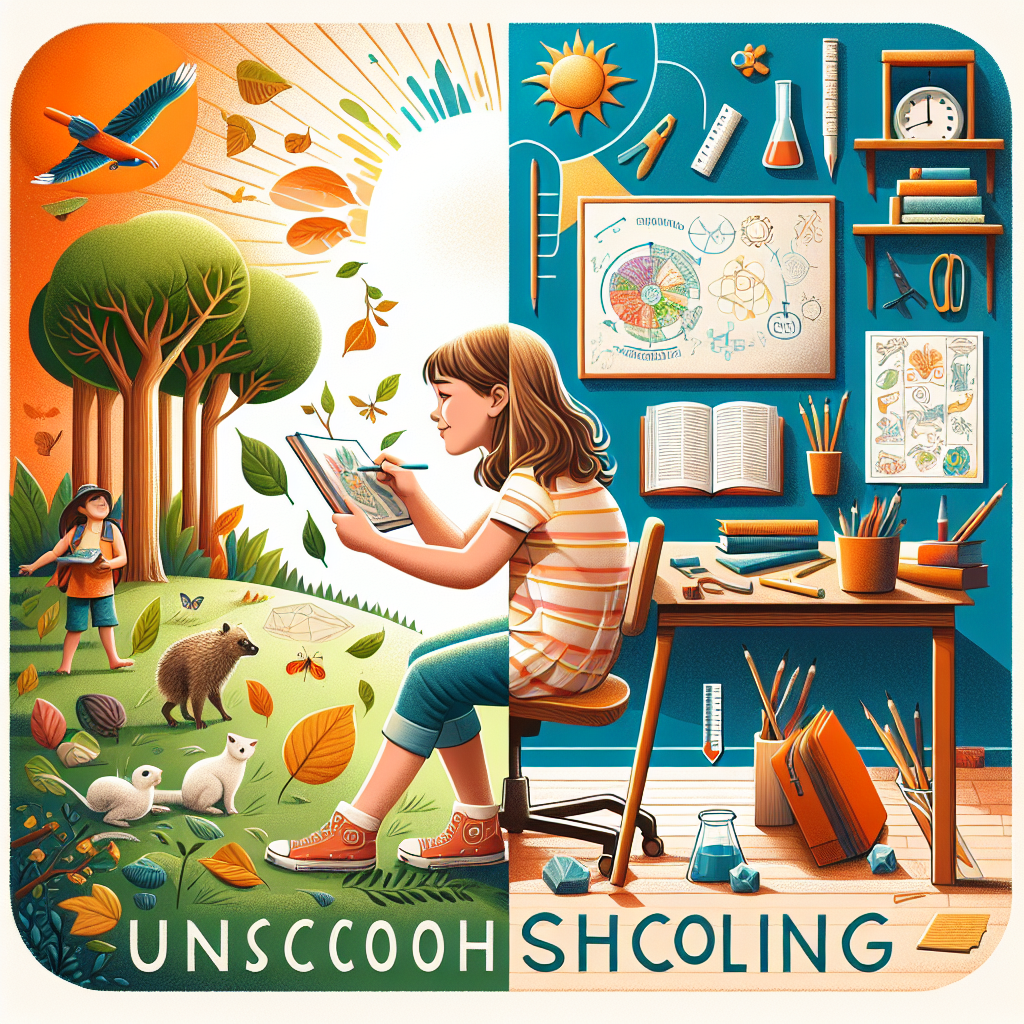
In a world where traditional schooling doesn’t work for every child or family, more parents are exploring alternative education paths. Two of the most common approaches—homeschooling and unschooling—are often confused but offer distinct philosophies, structures, and benefits.
In this post, we’ll dive deep into the key differences between unschooling and homeschooling, helping you decide which model aligns best with your child’s needs, your values, and your lifestyle.
📌 Also Read:
👉 The Power of Self-Directed Learning for Kids
📚 What Is Homeschooling?
Homeschooling refers to structured education at home, typically led by a parent or tutor using a curriculum. It mirrors the traditional school system but allows for more flexibility, customization, and pacing.
- Curriculum-based: Parents follow pre-designed lesson plans or accredited programs.
- Assessment-driven: Students may take standardized tests or submit portfolios.
- Legal requirements: Most regions have clear regulations for homeschooling families.
🧠 Great for families who:
- Want control over academic pacing
- Prefer a familiar structure with guidance
- Need to meet regional school requirements
👉 Example curriculum providers:
🌱 What Is Unschooling?
Unschooling is a child-led learning philosophy that allows children to learn through life, play, exploration, and interest-based activities without a formal curriculum.
- No tests or grades
- Natural learning based on real-life experiences and interests
- Parent as facilitator, not instructor
🎯 Great for families who:
- Trust in child autonomy
- Want organic, joyful learning
- Value real-world over textbook knowledge
📚 Key resource:
Alliance for Self-Directed Education
🔍 Comparison Table: Homeschooling vs. Unschooling
| Feature | Homeschooling | Unschooling |
|---|---|---|
| Curriculum | Structured, purchased or designed by parent | No formal curriculum |
| Teaching Method | Parent/tutor led | Child-led learning |
| Learning Style | Academic-focused, subject-divided | Exploratory, real-life integrated |
| Assessments | Standardized tests, portfolios | No formal testing |
| Legal Recognition | Widely regulated and recognized | Varies by country/region |
| Flexibility | Medium—within a structured system | Very high—driven by child interests |
| Tools Used | Books, online programs, worksheets | Life experiences, games, discussions |
🔗 Legal Considerations: What the Law Says
Each country—and even state—has different laws for homeschoolers and unschoolers. While both are legal in many regions, unschoolers may need to align with local education authorities under broader homeschooling regulations.
✅ Check your region’s laws here:
💬 Can You Blend Both? Yes!
Many families choose a hybrid model—creating flexible lesson plans while leaving room for free exploration and unschooling principles.
For example:
- Mornings = structured math or reading
- Afternoons = child-led projects, nature walks, coding, baking, etc.
🌐 Useful Resources for Homeschooling and Unschooling
| Resource | Type | Website |
|---|---|---|
| Khan Academy | Free academic content | khanacademy.org |
| Outschool | Live, interest-based classes | outschool.com |
| Self-Directed Education Alliance | Unschooling support | self-directed.org |
| Home School Legal Defense (HSLDA) | Legal support & advocacy | hslda.org |
| The BabynMom Blog | Alternative education tips | https://thebabynmom.org |
✨ Final Thoughts: Which One is Right for You?
There’s no one-size-fits-all answer. If your child thrives with a little structure, homeschooling may be a great fit. If they love freedom and learn best through exploration, unschooling might be the way to go.
🎯 The goal isn’t to replicate the school system—it’s to unlock your child’s potential in a way that’s aligned with your family’s philosophy and needs.
📩 Want More Tips on Self-Directed Education?
Subscribe to our newsletter and get weekly resources on homeschooling, project-based learning, and child-led education.
👉 Visit: https://thebabynmom.org