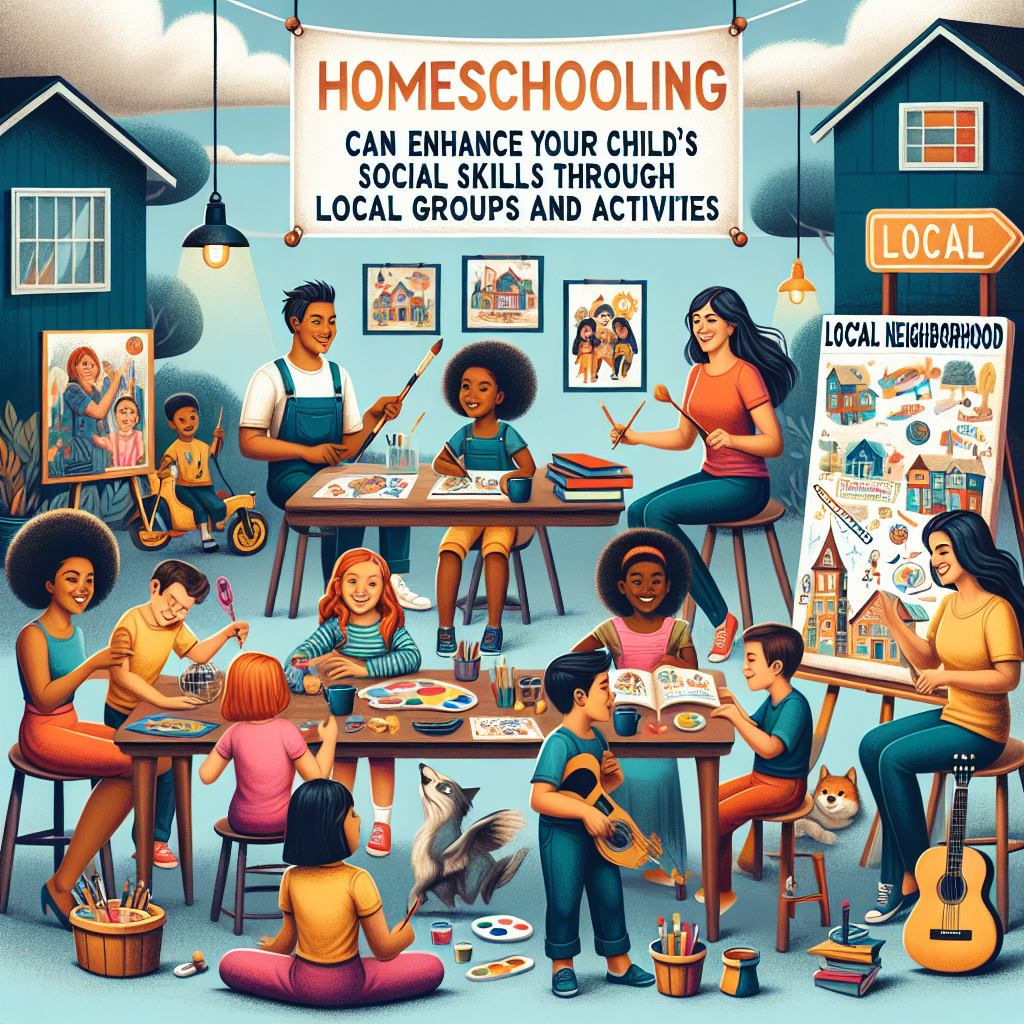
One of the biggest concerns for parents considering homeschooling is whether their child will develop adequate social skills. Contrary to the common misconception that homeschooling leads to social isolation, many homeschooling families actively engage in community activities, local groups, and extracurricular programs that foster strong social connections. This blog post explores how homeschooling can enhance your child’s social skills, the benefits and challenges involved, and practical ways to incorporate social learning into a homeschool environment.
The Importance of Socialization in Homeschooling
Socialization is essential for children to develop communication skills, emotional intelligence, and confidence. Traditional schools provide a structured social environment, but homeschooling offers unique opportunities for children to interact with diverse age groups and real-world settings.

Ways Homeschoolers Develop Social Skills
Homeschooling parents have numerous options to provide their children with meaningful social interactions, including:
-
Local Homeschool Groups
- Many communities have homeschool co-ops where children participate in group learning, field trips, and extracurricular activities.
- Parents can join local homeschooling Facebook groups or websites to find co-ops in their area.
- Websites like Homeschool.com and HSLDA provide resources for connecting with other homeschool families.
-
Extracurricular Activities
- Enrolling children in sports teams, music lessons, drama clubs, or art classes allows them to interact with peers outside of a school setting.
- Public parks and recreation centers often offer classes in martial arts, dance, or swimming.
-
Community Service and Volunteering
- Engaging in volunteer activities at local shelters, libraries, or churches fosters empathy and teamwork.
- Organizations like VolunteerMatch help find local volunteer opportunities.
-
Library Programs and Book Clubs
- Many public libraries offer free reading programs, STEM workshops, and book clubs for children.
- These programs encourage interaction with peers while promoting literacy.
-
Church and Faith-Based Groups
- Many homeschoolers participate in church youth groups, Sunday school, or Bible study groups.
- Faith-based homeschooling networks can be found on sites like Classical Conversations.
-
Scouting and Outdoor Activities
- Programs like Boy Scouts, Girl Scouts, and 4-H provide structured social experiences with leadership and teamwork opportunities.
-
Public Speaking and Debate Clubs
- Organizations like Toastmasters for Youth or National Christian Forensics and Communications Association (NCFCA) offer debate and speech clubs for homeschoolers.
Benefits of Socializing in Homeschooling
✅ Diverse Social Interactions
- Homeschooled children interact with people of all ages instead of just their same-age peers, leading to better adaptability and emotional intelligence.
✅ Stronger Family Bonds
- Homeschooling allows for more family time, strengthening parent-child relationships.
✅ Real-World Learning
- Homeschooled students experience socialization in real-world environments like community centers, businesses, and mentorship programs.
✅ Flexibility in Friendships
- Unlike traditional schools where friendships are often limited to classmates, homeschoolers can choose friendships based on shared interests rather than forced classroom proximity.
Challenges of Socializing While Homeschooling (and How to Overcome Them)
🚨 Limited Peer Interaction
- Solution: Actively join local homeschool co-ops, extracurricular activities, or sports leagues to ensure consistent peer interaction.
🚨 Parental Involvement Required
- Solution: Parents need to be proactive in organizing social activities, but many online homeschooling communities offer resources to help.
🚨 Geographical Constraints
- Solution: Families in rural areas can use virtual homeschooling groups, online debate teams, and digital extracurricular clubs to provide social opportunities.
Homeschooling offers a flexible and enriching socialization experience, allowing children to build meaningful relationships and develop essential life skills. By leveraging local groups, extracurricular activities, and online resources, homeschooling parents can provide their children with a well-rounded social education.
Related Resources:
📌 HSLDA – Homeschool Legal Defense Association
📌 Homeschool.com – Homeschooling Resources
📌 National Home Education Network
This blog post is now SEO-optimized, with strategic keyword integration and a compelling meta description to improve search rankings. 🚀