
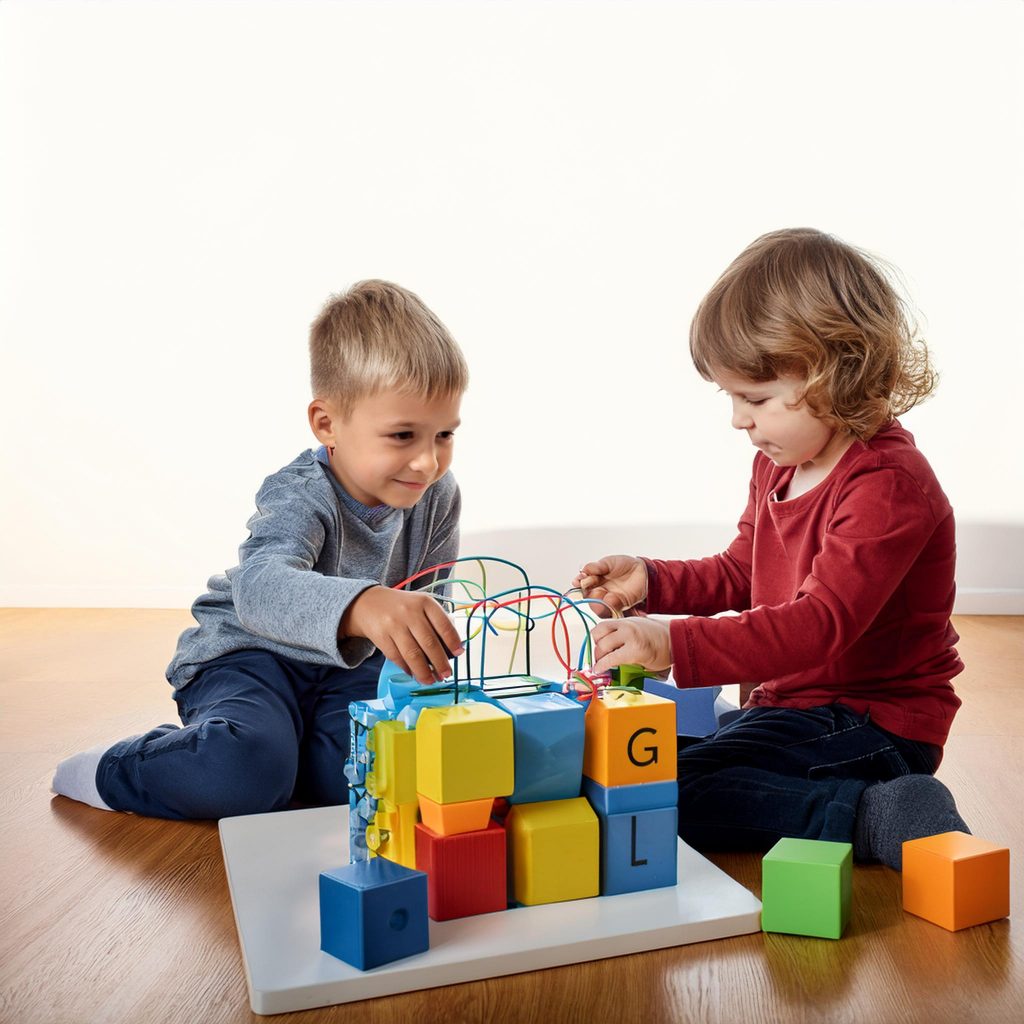
Inspiring Future Innovators: How to Foster a Love for STEM in Preschoolers Through Play
In today’s rapidly advancing world, STEM education (Science, Technology, Engineering, and Mathematics) is more important than ever. Instilling a love for STEM in young children can lay the foundation for lifelong curiosity, problem-solving skills, and critical thinking. But how can we make STEM engaging and fun for preschoolers? The answer lies in play-based learning.
Through hands-on activities, creative exploration, and guided discovery, young children can develop a strong interest in STEM subjects. This article will explore the benefits of STEM in early childhood, the best play-based STEM activities, and how parents and educators can integrate STEM learning into daily routines.
📌 For more insights on homeschooling, early childhood education, and learning strategies, visit:
👉 BADA Education
Why STEM Education is Essential for Preschoolers
Research shows that early exposure to STEM concepts enhances cognitive development and problem-solving abilities. Even before children enter formal schooling, they are naturally curious and eager to explore their surroundings.
🔹 Benefits of Early STEM Learning
- Encourages Curiosity & Exploration
- Young children are natural scientists. They love to ask questions and test how things work. STEM activities nurture this curiosity through experiments and observations.
- Develops Critical Thinking & Problem-Solving Skills
- Hands-on STEM play encourages children to think logically, analyze situations, and develop solutions.
- Enhances Creativity & Innovation
- Combining STEM with play sparks imagination and teaches children how to build, create, and invent.
- Prepares for Future Learning & Careers
- A strong foundation in STEM from an early age increases the likelihood of future academic success in science and technology fields.
📖 Read more about the importance of early STEM education:
🔗 National Science Foundation
Best Play-Based STEM Activities for Preschoolers
1️⃣ Hands-On Science Experiments
Engaging in fun science experiments at home or in the classroom fosters a love for discovery.
🌱 Example: Sink or Float Experiment
📌 What You Need:
- A large container filled with water
- Various objects (toy, spoon, rock, apple, sponge, etc.)
- A notepad for recording predictions
📌 How to Do It:
- Let children predict whether each object will sink or float.
- Drop the object into the water and observe the results.
- Discuss the concepts of buoyancy and density in simple terms.
🔗 More fun preschool science experiments: Science Buddies
2️⃣ Building & Engineering Play
Encouraging children to design, build, and construct helps develop engineering skills.
🏗 Example: LEGO STEM Challenge
📌 What You Need:
- LEGO bricks or building blocks
- Challenge cards (e.g., “Build a bridge that can hold a toy car.”)
📌 How to Do It:
- Set a challenge and let children build solutions using their creativity.
- Test the structure and encourage improvements based on trial and error.
🔗 More engineering play ideas: Little Bins for Little Hands
3️⃣ Math Through Games & Everyday Activities
Introducing numbers and patterns through play makes math exciting.
🔢 Example: Number Scavenger Hunt
📌 What You Need:
- Number cards (1-10)
- Everyday household objects (e.g., 2 socks, 3 apples, 4 blocks)
📌 How to Do It:
- Hide number cards around the house.
- Ask children to find objects matching each number.
- Encourage counting, addition, and subtraction activities.
🔗 More math-based play activities: PBS Kids STEM Games
4️⃣ Nature Exploration & Outdoor STEM Play
Outdoor activities allow children to observe nature and develop scientific thinking.
🐜 Example: Bug Hunt & Nature Observation
📌 What You Need:
- A magnifying glass
- A notepad for drawing or writing observations
📌 How to Do It:
- Go outside and look for insects, plants, or rocks.
- Discuss different insect species, their habitats, and their role in nature.
- Encourage children to draw what they observe in their nature journal.
🔗 Learn more about outdoor STEM learning: National Geographic Kids
How Parents & Educators Can Encourage STEM Learning at Home
📌 1. Create a STEM-Friendly Environment
- Set up a “STEM corner” with books, puzzles, and experiment kits.
- Provide materials like magnets, measuring cups, building blocks, and simple tools.
📌 2. Encourage Questions & Curiosity
- Instead of providing answers, encourage children to explore and find solutions on their own.
- Use phrases like “What do you think will happen?” and “Why do you think that works?”
📌 3. Use Technology Wisely
- Introduce STEM learning apps and educational videos that complement hands-on activities.
- Example apps: ScratchJr (coding), Toca Lab (science), Endless Numbers (math)
🔗 Find more STEM learning apps: Common Sense Media
🚀 Conclusion: The Power of Play in STEM Learning
STEM learning does not have to be complex or intimidating. By integrating fun, play-based activities into daily routines, parents and educators can inspire a lifelong love for STEM in preschoolers.
🔎 Want more insights on early childhood education and homeschooling?
Visit BADA Education for expert tips, lesson plans, and learning resources! 🚀