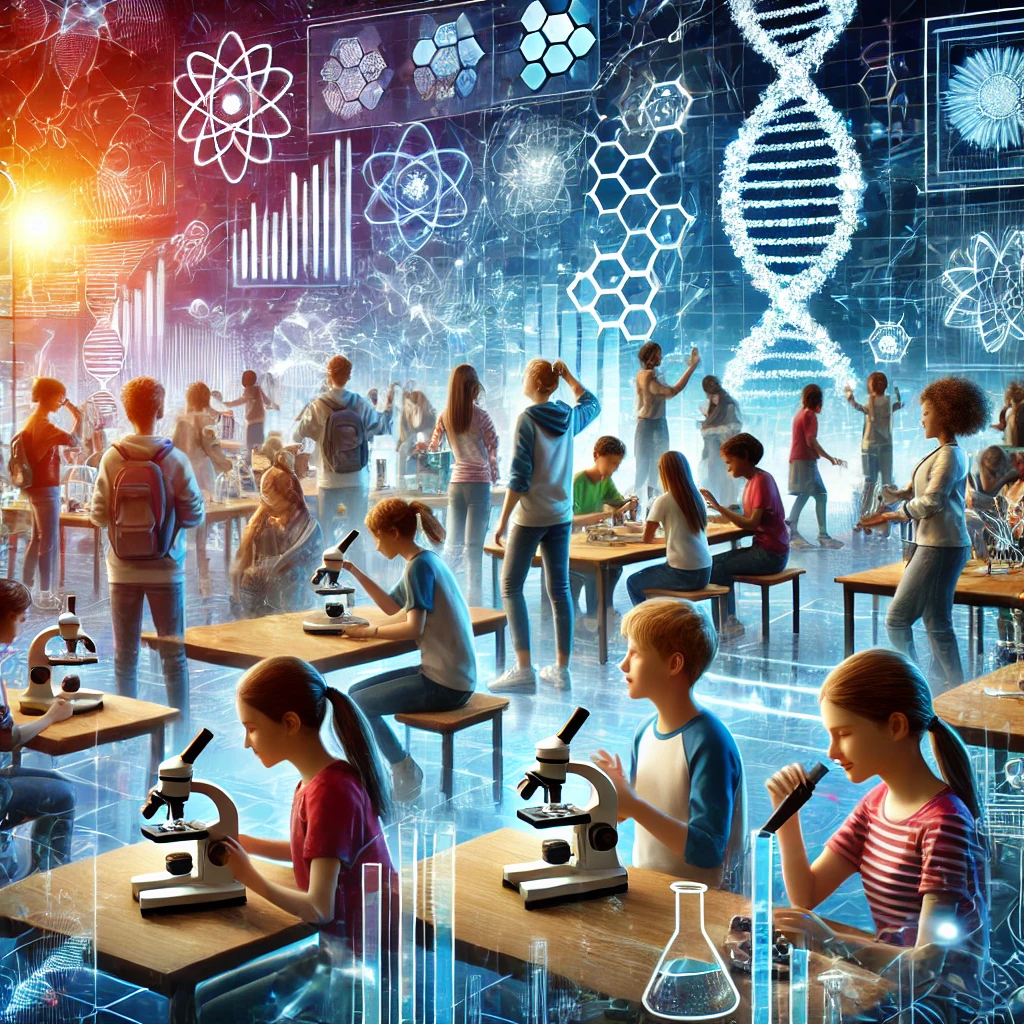
Science education plays a vital role in shaping future innovators, problem-solvers, and leaders in a rapidly advancing world. With the growing importance of STEM (Science, Technology, Engineering, and Mathematics) fields, high-quality science learning programs are more essential than ever. These programs provide structured, interactive, and hands-on learning experiences for students, educators, and professionals seeking to enhance their scientific expertise.
This article explores the best science learning programs, their benefits, and how to choose the right one for your needs.
1. The Importance of Science Learning Programs
1.1 Bridging the Gap Between Theory and Application
- Science programs connect classroom learning with real-world applications, making abstract concepts more tangible.
- They offer laboratory experiences, hands-on projects, and research opportunities that reinforce theoretical knowledge.
1.2 Encouraging Innovation and Critical Thinking
- These programs teach students how to analyze data, think critically, and solve complex problems.
- Participants gain exposure to emerging technologies, scientific discoveries, and interdisciplinary collaboration.
1.3 Preparing for Future Careers
- Science education is essential for careers in medicine, engineering, AI, space exploration, and environmental sciences.
- Programs offer career guidance, mentorship, and networking opportunities with professionals in various scientific fields.
Resource: National Science Teachers Association
2. Top Science Learning Programs for Different Age Groups
2.1 K-12 Science Programs
- NASA STEM Engagement – Offers interactive science projects, space exploration activities, and virtual learning tools.
- Smithsonian Science Education Center – Provides STEM-focused curricula, teacher training, and student research programs.
- BADA EDUCATION Science Learning – Features customized STEM lessons, experiments, and student workshops.
Resource: NASA STEM Learning
2.2 College and University-Level Science Programs
- Harvard Online Science Courses – Free and paid courses in biology, chemistry, physics, and environmental sciences.
- MIT OpenCourseWare – Offers hundreds of science courses with video lectures and problem sets.
- KIST Science Graduate Programs – Provides advanced research training in nanotechnology, biotechnology, and AI.
Resource: MIT OpenCourseWare – Science
2.3 Professional and Lifelong Learning Programs
- Coursera & edX Science Programs – Online learning platforms with courses from top universities.
- American Association for the Advancement of Science (AAAS) Training – Offers workshops and certification programs for science professionals.
- BADA EDUCATION Science Learning Hub – A comprehensive science education resource for lifelong learners.
Resource: AAAS Science Learning
3. How to Choose the Right Science Learning Program
3.1 Define Your Learning Goals
- Are you looking to improve your general science knowledge or specialize in a particular field?
- Do you prefer self-paced learning, instructor-led courses, or hands-on experiences?
3.2 Consider Your Budget and Time Commitment
- Free programs like Khan Academy and MIT OpenCourseWare offer great value.
- Paid certifications and professional courses provide in-depth knowledge and career advancement.
3.3 Check Program Features
- Look for interactive tools, virtual labs, mentorship opportunities, and research-based learning.
- Ensure the program is recognized by reputable scientific institutions.
4. Maximizing the Benefits of Science Learning Programs
4.1 Engage in Hands-On Learning
- Participate in lab experiments, fieldwork, and scientific competitions.
- Apply theories to real-world challenges and projects.
4.2 Network with Experts and Fellow Learners
- Join science communities, online forums, and mentorship programs.
- Attend conferences, webinars, and research symposiums.
4.3 Stay Updated with Emerging Scientific Trends
- Follow science news, academic journals, and innovation reports.
- Enroll in continuous education programs to expand your expertise.
5. The Future of Science Education
5.1 AI and Digital Learning in Science Education
- AI-driven learning platforms provide personalized learning paths and intelligent tutoring systems.
- Virtual and augmented reality enhance scientific visualization and simulation-based learning.
5.2 Global Collaboration and Open Science
- Open-access research and international cooperation are expanding scientific education beyond borders.
- Platforms like ResearchGate and Google Scholar allow global knowledge sharing.
5.3 Advancing STEM Diversity and Inclusion
- Science programs are focusing on equity in STEM education.
- Scholarships and mentorship programs support underrepresented communities in science.
Resource: STEM Education Coalition
Final Thoughts
Science learning programs are a gateway to discovery, innovation, and career success. Whether you are a student, educator, or professional, choosing the right program can enhance your knowledge, skills, and opportunities in the scientific field.
By leveraging the best available science education resources, individuals can stay ahead in a rapidly evolving world of technology and discovery.
Which science learning program has impacted your journey the most? Share your experiences below!