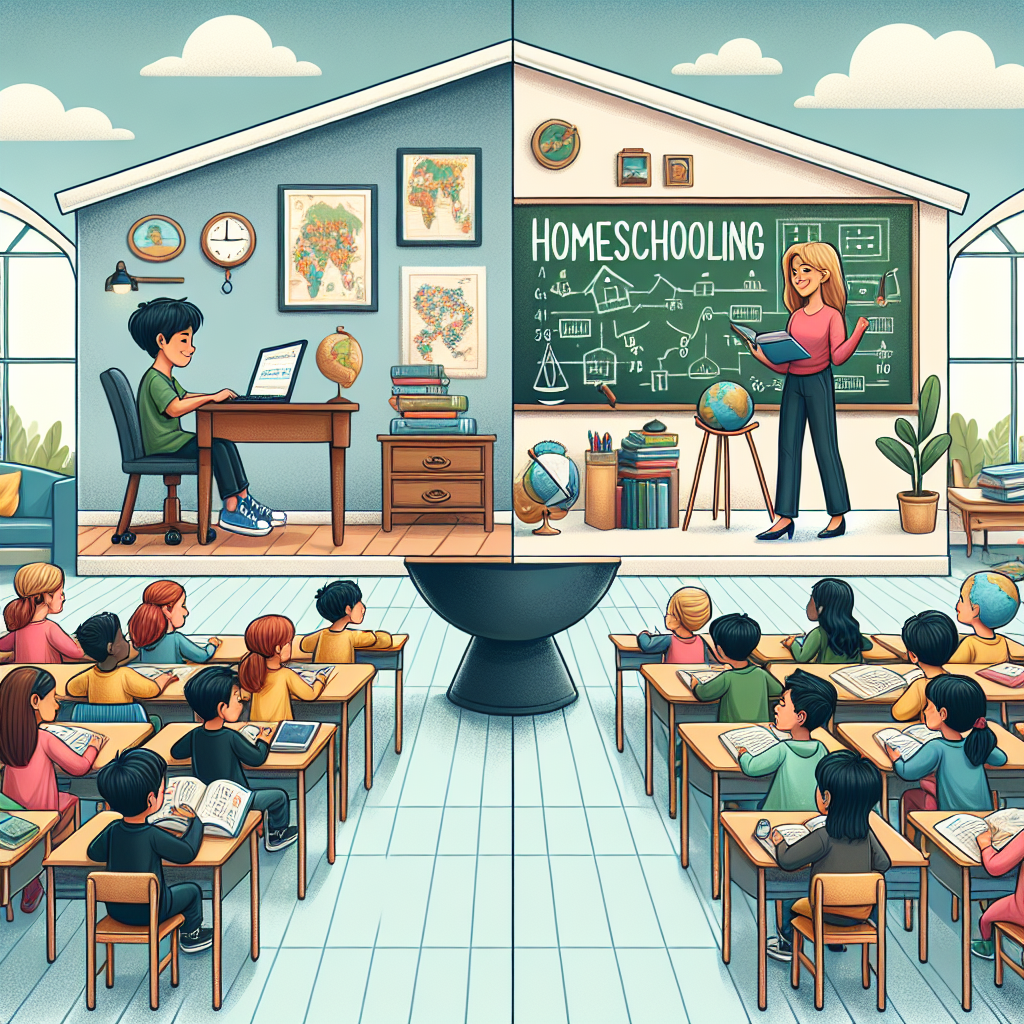
Homeschooling is an alternative education method where parents take the primary responsibility for their child’s education. Instead of attending a traditional public or private school, children learn at home, following a curriculum chosen by their parents.
According to the National Center for Education Statistics (NCES), homeschooling has been steadily increasing in the U.S., with over 3 million students being homeschooled in recent years. (Source: https://nces.ed.gov)
While homeschooling offers freedom and flexibility, it also requires commitment and planning. Let’s explore the advantages and disadvantages of homeschooling.
Advantages of Homeschooling
✅ 1. Customized Learning & Academic Flexibility
Homeschooling allows parents to tailor education to fit their child’s learning style, pace, and interests. This means:
- Personalized Curriculum: Parents can choose educational materials that align with their child’s strengths and weaknesses.
- Flexible Schedule: No rigid school hours, enabling travel, extracurricular activities, and deep learning in areas of interest.
- Mastery-Based Learning: Students can spend more time on subjects they struggle with and move faster in areas where they excel.
📌 Example: If a child is passionate about science, parents can incorporate hands-on experiments, STEM field trips, and online courses beyond what a public school offers.
✅ 2. Strong Family Bonds & Safe Learning Environment
Homeschooling fosters closer family relationships as children spend more time with their parents and siblings.
- Safe Environment: No exposure to bullying, peer pressure, or negative social influences.
- More Parental Control: Parents can oversee moral, ethical, and religious education.
- Individual Attention: One-on-one teaching allows parents to focus on their child’s specific needs.
📌 Did You Know? Research from the National Home Education Research Institute (NHERI) suggests that homeschooled children have stronger family connections than their traditionally schooled peers. (Source: https://www.nheri.org)
✅ 3. Socialization on Your Terms
Contrary to common misconceptions, homeschooled children do socialize, but in a different setting.
- Real-World Interactions: Homeschooled kids interact with people of all ages, not just peers.
- Diverse Activities: Opportunities for community service, sports teams, music lessons, and homeschool co-ops.
- Less Negative Peer Influence: Reduced exposure to bullying, unhealthy competition, and social stress.
📌 Tip: Join a local homeschool group to connect with other families and organize field trips, playdates, and study sessions.
✅ 4. Higher Academic Performance
Studies show that homeschooled students often outperform their public school counterparts in standardized tests and college admissions.
- Higher SAT/ACT Scores: Many colleges report that homeschooled students score above average.
- More College Acceptances: Top universities, including Harvard, Stanford, and MIT, actively recruit homeschoolers.
- Self-Motivated Learning: Homeschooling fosters independence, critical thinking, and problem-solving skills.
📌 Case Study: According to a study by Dr. Brian Ray of NHERI, homeschooled students score 15-30% higher on standardized tests compared to public school students. (Source: https://www.nheri.org)
Disadvantages of Homeschooling
❌ 1. Time & Commitment from Parents
Homeschooling requires significant dedication from parents, including:
- Lesson Planning & Teaching: Parents must research, prepare lessons, and ensure academic progress.
- Supervision & Organization: Balancing household responsibilities and teaching duties can be overwhelming.
- Parental Burnout: Teaching multiple subjects daily without support can be exhausting.
📌 Solution: Consider joining a homeschool co-op or using online courses for assistance.
❌ 2. Limited Social Interaction (If Not Proactive)
While homeschooled kids can socialize, it requires effort from parents to ensure they engage with peers.
- Fewer Daily Peer Interactions: Unlike traditional school settings, homeschooling lacks built-in social structures.
- Must Find Community Activities: Parents need to seek out sports leagues, arts programs, and youth groups.
📌 Tip: Use online homeschooling communities like https://www.homeschool.com to find local events and resources.
❌ 3. Potential Gaps in Curriculum
Since parents design their child’s education, there’s a risk of missing key academic areas.
- Lack of Advanced Courses: Some parents may struggle to teach higher-level math or science.
- Fewer Lab & Group Learning Opportunities: Science experiments, group discussions, and peer feedback can be harder to facilitate at home.
📌 Solution: Enroll in online classes (such as Outschool or Khan Academy) to fill in curriculum gaps.
❌ 4. Financial Considerations
Homeschooling can be costly because parents must purchase educational materials, supplies, and possibly sacrifice a full-time income.
- No Free Public School Resources: Parents pay for textbooks, online courses, and extracurricular activities.
- Lost Income Potential: One parent often stays home to teach, reducing household earnings.
📌 Solution: Look for free homeschooling resources at:
- Khan Academy: https://www.khanacademy.org
- Library-Based Curriculum: Check out The Charlotte Mason Method for budget-friendly homeschooling. (Learn More: Charlotte Mason Companion)
Homeschooling vs. Traditional Schooling: Which is Better?
There is no one-size-fits-all answer. The best education depends on your child’s learning style, family situation, and long-term goals.
| Factor | Homeschooling | Traditional School |
|---|---|---|
| Flexibility | High – Choose your own schedule | Low – Fixed school hours |
| Socialization | Community-based & mixed-age | Daily peer interactions |
| Curriculum Control | Parents decide | Government-regulated |
| Cost | Moderate (varies) | Free (public schools) |
| Parental Involvement | High | Low to moderate |
📌 Read More: Check out our guide on How to Start Homeschooling for legal steps and curriculum planning.
Final Thoughts: Is Homeschooling Right for You?
Homeschooling is a deeply personal choice, offering both unique benefits and challenges. If you value flexibility, personalized learning, and family engagement, it could be a great fit. However, it requires commitment, time, and careful planning.
Key Takeaways:
✅ Pros: Tailored education, flexible schedule, safe environment, strong academics.
❌ Cons: Requires time & effort, potential socialization challenges, financial considerations.
📌 Important Resources:
- Legal Info & State Laws: HSLDA
- Curriculum & Planning: The Home School Mom
- Support Groups & Co-Ops: Homeschool.com