Understanding the Charlotte Mason Educational Philosophy
Charlotte Mason's educational philosophy emphasizes nurturing a child's love for learning through a gentle, respectful approach. Central to this philosophy are the 3 R’s: Reading, Writing, and Arithmetic. These fundamental skills are intricately woven into a holistic curriculum designed to cultivate both knowledge and character.
The Art of Reading in the Mason Approach
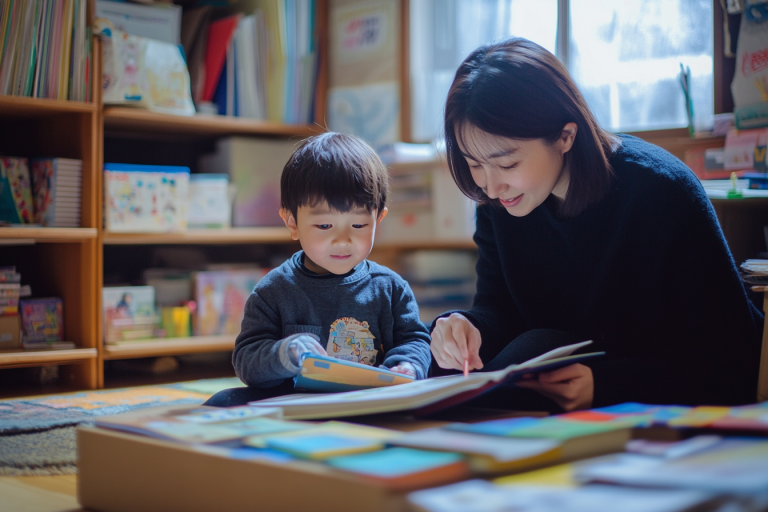
Reading forms a cornerstone of the Charlotte Mason method. She believed that children should be exposed to living books—literature that sparks the imagination and fuels intellectual curiosity. Rather than relying on dry textbooks, Mason's approach encourages engagement through rich narratives and compelling stories.
In teaching reading, she advocated for practices that foster a genuine love for literature. By selecting interesting, age-appropriate books, children are encouraged to develop independent reading skills, transforming their educational journey into a delightful experience. This approach not only enhances cognitive skills but also instills a lifelong passion for learning.
Developing Writing Skills with Grace and Creativity
Writing in the Charlotte Mason system goes beyond mere technical proficiency. It is about nurturing a child's ability to express thoughts and emotions clearly and creatively. Two key components—narration and copywork—form the foundation of Mason's writing approach.
Narration involves retelling a story in one's own words, helping to develop comprehension and articulation. Copywork, meanwhile, allows students to learn grammar, punctuation, and style by copying classical literature. This gradual introduction to composition encourages creativity and builds confidence in young writers, eventually leading to more complex written expressions.
Arithmetic: Emphasizing Understanding Over Memorization
Arithmetic is taught in a way that makes it both engaging and practical. The Charlotte Mason method uses real-life applications and manipulatives to foster a deep understanding of mathematical concepts. Instead of rote memorization, students are encouraged to grasp the principles behind the numbers, which helps them apply mathematics effectively in everyday situations.
This approach to arithmetic ensures that children are not just learning to calculate but are also developing critical thinking skills. It emphasizes understanding and problem-solving, making math a subject that is both relevant and enjoyable.
Harmonizing the 3 R’s in the Curriculum
Charlotte Mason's curriculum uniquely integrates reading, writing, and arithmetic, promoting a holistic educational experience. This intersection allows for interdisciplinary learning, where skills acquired in one area enhance those in another. Activities are designed to encourage students to draw connections between subjects, fostering a more profound and interconnected understanding of the world around them.
For instance, a lesson on historical events might involve reading a living book, writing a narrated account, and calculating historical timelines in arithmetic. Such integration not only reinforces learning but also makes education a cohesive and enjoyable journey.
Exploring the Advantages of Mason's Approach
Many parents and educators have observed the numerous benefits of the Charlotte Mason method. Students often exhibit a heightened sense of curiosity, improved language skills, and a better grasp of mathematical concepts. By emphasizing quality over quantity and fostering a nurturing environment, the approach leads to well-rounded individuals who are eager to learn and explore.
Resources for Further Exploration
For those interested in delving deeper into the Charlotte Mason educational philosophy, a wealth of resources is available. Books written by Mason herself offer insight into her methods and principles, while numerous articles and websites provide practical advice and support. Connecting with Charlotte Mason communities can also be invaluable, offering shared experiences and resources for successful implementation.
This timeless educational approach continues to inspire educators and parents, highlighting the enduring importance of the 3 R’s in developing well-educated and thoughtful individuals.