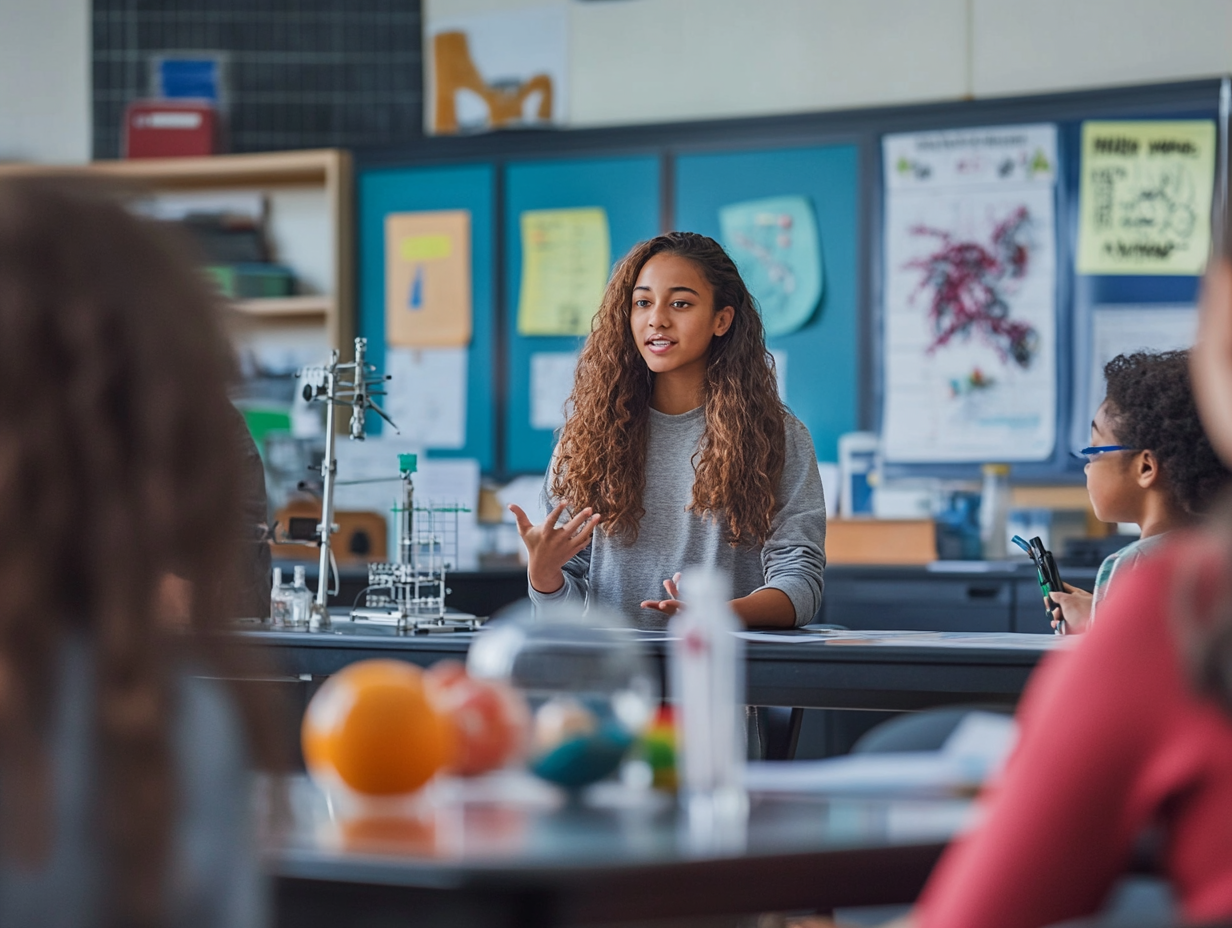
Science education should go beyond textbooks and standardized tests—it should inspire critical thinking, inquiry, and a passion for discovery. By fostering scientist voices in the classroom, educators can help students engage with real-world scientific research, develop strong communication skills, and see themselves as contributors to the global scientific community.
This article explores why amplifying scientist voices is essential, strategies for implementation, and how educators can create a more interactive and engaging science learning environment.
1. Why Fostering Scientist Voices Matters
1.1 Encouraging Inquiry-Based Learning
- Scientists rely on questioning, experimenting, and analyzing data to uncover new knowledge.
- Encouraging students to think like scientists helps them develop problem-solving skills and curiosity.
1.2 Enhancing Science Communication Skills
- Scientific discovery isn’t just about research—it’s about effectively communicating findings.
- Encouraging students to explain concepts, debate theories, and present their research strengthens their communication skills.
1.3 Building Confidence in STEM Fields
- Many students feel intimidated by STEM subjects due to traditional lecture-based teaching.
- Giving them a voice in science discussions builds confidence and encourages diversity in STEM careers.
Resource: National Science Teaching Association
2. Strategies for Fostering Scientist Voices in the Classroom
2.1 Implement Student-Led Science Discussions
- Assign students current scientific research topics to present and discuss.
- Encourage debates on ethical issues in science, such as gene editing and climate change.
2.2 Introduce Inquiry-Based and Project-Based Learning
- Shift from traditional lectures to hands-on experiments, real-world problem-solving, and student-led projects.
- Allow students to form hypotheses, design their own experiments, and present their findings.
2.3 Connect Students with Real Scientists
- Invite guest speakers from STEM fields to share insights about their research and careers.
- Set up virtual field trips to research labs, NASA centers, or medical institutions.
- Use platforms like Skype a Scientist to connect students with working scientists worldwide.
Resource: Skype a Scientist
2.4 Encourage Scientific Writing and Publication
- Have students write science blogs, create research posters, or submit articles to student science journals.
- Utilize platforms like Science Journal for Kids to help students explore real scientific studies.
2.5 Incorporate Citizen Science Projects
- Engage students in real scientific research through citizen science initiatives.
- Examples:
- Zooniverse (Astronomy & Wildlife Research)
- Globe Program (Climate & Environmental Data Collection)
- Foldit (Protein Folding & Biomedical Research)
Resource: Zooniverse
3. Engaging Students Through Science Communication
3.1 Use Science Podcasts and Videos
- Introduce students to science podcasts and YouTube channels hosted by real scientists.
- Example resources:
- SciShow (YouTube Science Channel)
- Science Vs (Podcast Exploring Scientific Controversies)
3.2 Conduct Science Storytelling Activities
- Encourage students to tell the story of a famous scientist or an important scientific discovery.
- Assign projects where students interview local scientists or write science fiction stories based on real concepts.
3.3 Host Science Conferences and Symposiums
- Organize a school-wide science conference where students present their research to peers and teachers.
- Create a STEM Speaker Series featuring researchers from universities and local industries.
Resource: BADA EDUCATION – Science Learning & STEM Programs
4. The Impact of Fostering Scientist Voices
4.1 Increasing Student Engagement and Interest in Science
- Active participation in discussions and projects leads to greater student investment in learning.
- Students develop a passion for science when they feel their ideas and contributions matter.
4.2 Strengthening Critical Thinking and Problem-Solving
- Encouraging debate, analysis, and creative problem-solving mirrors real-world scientific thinking.
- Students become more adept at evaluating scientific claims and misinformation.
4.3 Inspiring the Next Generation of Scientists
- Representation and diverse scientist role models encourage students from all backgrounds to pursue STEM careers.
- Building student confidence in science leads to higher STEM retention rates in college and careers.
Resource: STEM Education Coalition
5. Looking Ahead: The Future of Science Education
5.1 Expanding Access to STEM Resources
- AI-powered learning tools will provide personalized science education experiences.
- More schools will integrate VR/AR-based science labs for virtual hands-on experiments.
5.2 Enhancing Global Scientific Collaboration in Classrooms
- Virtual platforms will enable students to collaborate with scientists from around the world.
- Online citizen science projects will increase student participation in real-world research.
5.3 Building a Stronger Science Communication Curriculum
- Schools will integrate public speaking, science writing, and digital communication into science courses.
- More focus on ethical discussions and responsible scientific research.
Resource: National Academies of Sciences – Science Education
Final Thoughts
By fostering scientist voices in the classroom, educators can inspire curiosity, deepen student engagement, and build confidence in STEM fields. Encouraging students to think, act, and communicate like scientists prepares them for lifelong learning, problem-solving, and leadership in science and technology.
Through inquiry-driven discussions, project-based learning, and real-world science experiences, students develop not only scientific knowledge but also the communication skills needed to share their discoveries with the world.
Are you ready to empower future scientists in your classroom? Start implementing these strategies today!